-
Sludge Dewatering Screw Press Package for Overseas Client
(News)
2026-08-01 01:25:55
News came that GN Separationhas recently finished the fabrication for a new project for a client from overseas, it was a dewatering screw press combined with a chemical dosing unit. 1.As a mature...
-
Welcome to GN Solids Mena’s New Dubai Office in Jebel Ali
(News)
2026-07-26 10:11:04
Big day! GN Solids Mena’s brandnew Dubai office is officially open. Located in the prime Jebel Ali district, a core commercial and industrial hub of Dubai renowned for its convenient global...
-
GNTBM-500B Slurry Separation Plant for Middle East TBM Project
(News)
2026-07-19 14:57:50
Amid the rapaid expansion of ultra-long tunnel, cross-river, and urban underground infrastructure projects worldwide, Tunnel Boring Machine (TBM) tunneling technology has become the core solution...
Sludge Dewatering Screw Press Package for Overseas Client
News came that GN Separation has recently finished the fabrication for a new project for a client from overseas, it was a dewatering screw press combined with a chemical dosing unit.
1.As a mature solution for solids-liquid separation, the combination of screw press and chemical dosing is widely adopted in sewage treatment plants, food processing factories, livestock breeding farms, pulp and paper mills, sludge disposal stations and industrial wastewater treatment workshops. The two pieces of equipment operate synergistically rather than independently, where the chemical dosing unit lays the foundation for efficient dewatering, and the screw press completes physical extrusion separation, greatly improving separation efficiency, reducing moisture content of solid residues and lowering overall operating costs.
2.Sludge dewatering in municipal wastewater treatment plants is the most mainstream application scenario. After sewage biochemical treatment, residual activated sludge exists in a colloidal state with rich bound water inside sludge flocs. Pure mechanical squeezing by a screw press cannot break colloidal structures to release bound water, resulting in high water content of dewatered sludge (over 85%) that fails to meet landfill, incineration or compost standards. In this case, the chemical dosing unit precisely configures and quantitatively adds flocculants including polyacrylamide (PAM), ferric chloride, polyaluminum chloride and lime emulsion into the sludge pipeline in advance. The dosing system is equipped with automatic dissolving tanks, metering pumps, mixing reactors and online concentration detectors, which can adjust the dosage of chemicals in real time according to sludge flow rate, solid content and pH value to avoid excessive chemical consumption or insufficient flocculation.
3.After sufficient stirring and reaction, tiny sludge particles aggregate into large, dense and tough flocs that wrap free water and release bound water trapped inside colloids. The conditioned sludge is then transported into the screw press. Inside the screw press, the gradually narrowing screw cavity creates continuous mechanical extrusion pressure, filtrate flows out through filter screens, while solid sludge is pushed forward and discharged as dry sludge cakes. Cooperated with the chemical dosing unit, the water content of sludge discharged by the screw press can drop from more than 98% of original sludge to 60%–78%. Dry sludge cakes can be directly transported for incineration, land resource utilization or building material production, and separated filtrate flows back to the sewage treatment system for reprocessing, realizing closed-loop treatment of sludge.
With such scenarios, GN also make and provide other equipment located before and after the screw press and chemical dosing. For more information welcome to contact GN directly.
Welcome to GN Solids Mena’s New Dubai Office in Jebel Ali
Big day! GN Solids Mena’s brandnew Dubai office is officially open. Located in the prime Jebel Ali district, a core commercial and industrial hub of Dubai renowned for its convenient global logistics, superior infrastructure and strategic regional radiation advantages, the new office marks a pivotal milestone in GN Solids’ localized development layout across the Middle East and North Africa (MENA) region, bringing a brand-new chapter of efficient, one-stop professional services for regional clients.This is really another landmark for GN Company after the establishment of the other branch companies located in United States and Australia. Besides those branches outside China, GN also has 3 factories in China and four brands under the group.
After rigorous preparation and market layout optimization, GN Solids Mena has completed full operational deployment in Dubai. We incorporated last year. Now our sales, tech, and service teams are fully moved in. This complete team settlement signifies that GN Solids has bid farewell to the traditional remote service mode in the MENA market and realized full localization of front-line business teams. All on-site team members have in-depth industry experience and profound understanding of the local MENA market environment, regional project standards and client demands, laying a solid foundation for delivering targeted, high-quality industrial solutions and after-sales support.
The launch of the new Jebel Ali office realizes an efficient integrated business model, where sales talks, technical design, client training – all under one roof. In the past, regional clients often faced scattered service links, delayed technical response and disjointed after-sales support due to cross-regional communication barriers. The new office integrates core business modules including business negotiation, customized technical solution design, professional equipment operation training and project docking coordination. Whether it is preliminary project consultation and product matching negotiation, mid-term personalized technical scheme design tailored to client project scenarios, or later systematic equipment operation, maintenance and skill training for client teams, all procedures can be completed efficiently at the local Dubai office.
GNTBM-500B Slurry Separation Plant for Middle East TBM Project
Amid the rapaid expansion of ultra-long tunnel, cross-river, and urban underground infrastructure projects worldwide, Tunnel Boring Machine (TBM) tunneling technology has become the core solution for high-efficiency underground construction. As a critical supporting system for slurry shield TBM operations, the newly upgraded intelligent slurry separation plant has broken through traditional technical bottlenecks in slurry purification, solid-liquid separation, and cyclic utilization. By integrating multi-stage precision separation, intelligent frequency conversion control, and modular environmental protection design, the equipment has comprehensively improved the safety, efficiency, and green construction level of TBM tunneling, becoming an indispensable core facility for modern large-scale underground engineering.
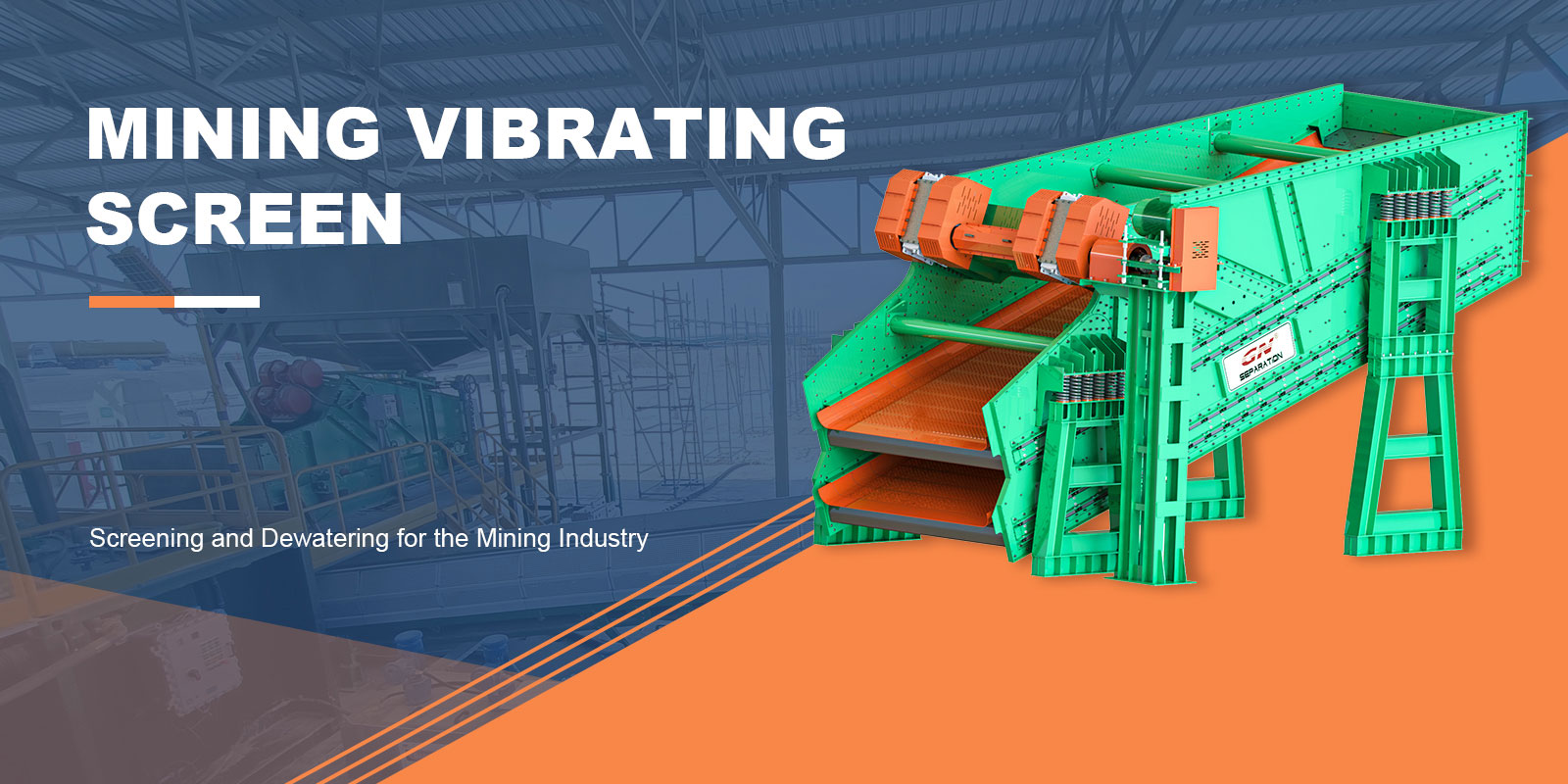
GN Separation has been supplying the TBM slurry separation plants to TBM contractors for years. Along with the development of GN mining vibrating screens, the vibrating screens equipped with polyurethane screen panels, GNTBM series slurry separating plants are upgraded to a newer and higher level.
A complete GNTBM slurry separation plant combines 3 steps for separation. Which is also the working principle of a GNTBM Slurry plant.Those three-stage graded separation process, covering coarse, medium and fine solid particle purification to achieve full-gradient slurry treatment.
1.The first stage is primary scalping screening, where a high-efficiency vibrating scalping screen rapidly removes large-particle impurities such as gravel and clay clumps in the raw slurry, effectively protecting downstream precision separation equipment from impact damage and blocking.
2.The second stage is desanding purification, utilizing large-diameter hydrocyclone groups to generate high-strength centrifugal force to separate medium-sized sand particles from the slurry, reducing solid-phase load and improving the uniformity of slurry fluidity.
3. The third stage is deep desilting treatment, through fine cyclone units to capture micron-level fine silt particles, realizing precise purification of circulating slurry and enabling the treated slurry to fully meet TBM cycling standards.
This GNTBM-500 for middle east is one model among GNTBM Slurry Plants, and based on differnet requested slurry capacity, GN has even larger models for option by using bigger or more machine choices.
GN 22 Inch Decanter Centrifuge for Africa Tank Bottom Oily Sludge Treatment
Industrial waste management has ushered in a new upgrade in oily sludge disposal, as advanced three-phase decanter centrifuge systems, equipped with professional heating units and chemical dosing modules, become the mainstream solution for tank bottom oily sludge treatment in the global petroleum and petrochemical industry.
Tank bottom oily sludge, a complex hazardous waste accumulated during long-term crude oil storage and tank cleaning, features high viscosity, stable oil-water-solid emulsification, and complex component composition, posing great challenges to traditional sedimentation and filtration treatment methods. For this application or similar, GN Separation has a mature solution. The integrated process combining heating conditioning, chemical dosing and decanter centrifugal separation has effectively solved the pain points of low separation efficiency, incomplete resource recovery and secondary pollution in conventional treatment technologies.
1. Decanter Centrifuge. As the core equipment of the whole treatment system, the horizontal decanter centrifuge relies on high-speed centrifugal separation technology to realize precise three-phase separation of oil, water and solid sludge. Different from static gravity separation, the decanter centrifuge generates a powerful centrifugal force hundreds of times greater than gravity through the high-speed rotation of its bowl and screw rotor. Driven by this force, materials are stratified automatically according to density differences: light-phase crude oil floats to the upper layer, middle-layer wastewater is separated independently, and heavy solid sludge is pushed to the discharge outlet by the screw conveyor for automatic discharging. This continuous and automated separation mode greatly improves treatment efficiency and realizes large-scale and stable disposal of tank bottom sludge.
2. Heating Section.To maximize the centrifuge’s separation performance, the supporting heating unit serves as a key pre-treatment link for raw sludge. Tank bottom oily sludge usually presents high viscosity at room temperature, and the dense oil film wraps solid particles, making it difficult to break the emulsified state. The integrated heating unit adopts steam heat exchange or electric constant-temperature heating mode, stably heating the sludge to the optimal temperature range of 60 to 80 degrees Celsius. Moderate heating can significantly reduce the viscosity of oily sludge, enhance the fluidity of mixed materials, and effectively weaken the stable interfacial tension of oil-water emulsions, laying a solid foundation for subsequent fine separation.
3. Chemical Dosing unit. Coordinated with the heating process, the automatic chemical dosing unit further optimizes the sludge conditioning effect. This precision dosing system can quantitatively inject demulsifiers, flocculants and coagulants according to the real-time oil content and viscosity of tank bottom sludge. The added chemical agents can rapidly break the stubborn oil-water-solid emulsified structure, aggregate tiny dispersed solid particles into large flocs, and separate dissolved oil from the water phase. Compared with manual dosing, the automated chemical dosing module ensures accurate reagent ratio, avoids excessive chemical consumption, and reduces treatment costs while improving separation purity.
GN Decanter Centrifuges Revolutionize Starch Separation for Potato Slices Flushing Water Recycling
GN Centrifuge is recently used in a new application in a domestic company in China, which is for separating the waste water after potato slices flushing water in order to recycle the water.
1.A revolutionize solution: As the global potato processing industry scales up production of potato slices, crisps, and frozen potato products, sustainable water treatment and resource recovery have become core priorities for manufacturers worldwide. Traditional potato slice flushing processes generate massive volumes of starchy wastewater rich in fine potato starch particles, soluble proteins, and organic residues. For decades, this wastewater was either discharged after simple treatment or discarded directly, leading to severe resource waste, high water pollution load, and increased operational costs for food factories. Today, the widespread adoption of decanter centrifuges dedicated to potato slices flushing water starch separation is reshaping the environmental and economic efficiency of the potato processing sector, bringing a mature, high-efficiency solution for starch recycling and industrial water reuse.
Potato slice flushing is an indispensable procedure in potato deep processing.
2.About the composition of water: After peeling and slicing, fresh potato slices carry abundant free starch on their surface. High-pressure water flushing is used to remove excess starch to prevent adhesion during frying or freezing and ensure the crisp texture of finished products. The resulting flushing water forms a dilute starch slurry with fine suspended starch particles, which are difficult to separate through traditional sedimentation and filtration methods. Natural sedimentation requires large-scale sedimentation tanks and long processing cycles, while conventional filter devices are prone to clogging by fine starch powder, resulting in low separation efficiency and unstable treatment effects. These technical bottlenecks have long restricted the green upgrading of potato processing enterprises.
3.Role of Decanter centrifuges: as advanced horizontal spiral centrifugal separation equipment, perfectly solve the pain points of potato flushing water treatment through precise centrifugal separation technology. The core working principle relies on high-speed rotational motion to generate powerful centrifugal force. When the starchy flushing water enters the rotating bowl of the decanter centrifuge, solid starch particles with higher density are quickly thrown to the inner wall of the bowl under centrifugal action. The built-in spiral conveyor pushes the concentrated solid starch sediment toward the conical discharge end for automatic discharging, while the purified light-phase water flows out from the liquid outlet. This continuous two-phase separation process realizes one-step efficient separation of starch solids and industrial washing water.
As a professional manufacturer of decanter centrifuges, GN Separation is your ideal choice as a supplier.